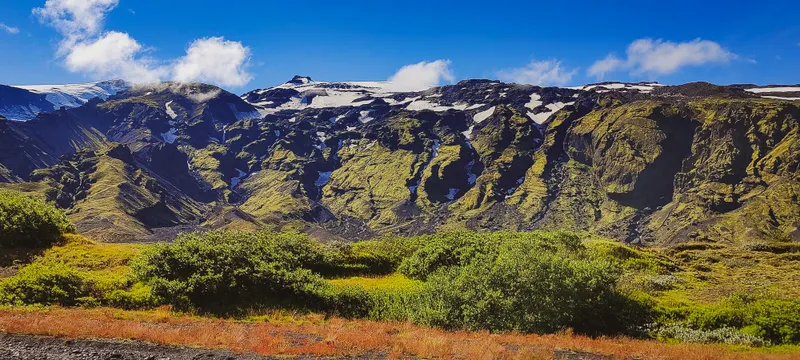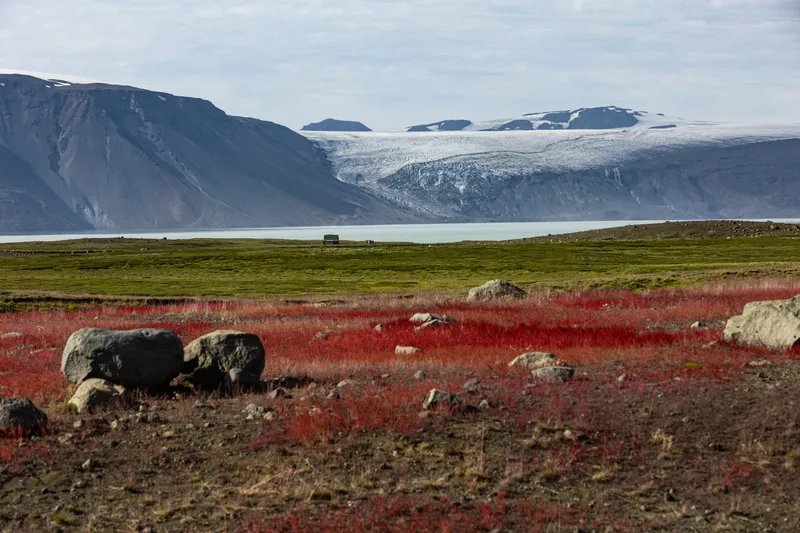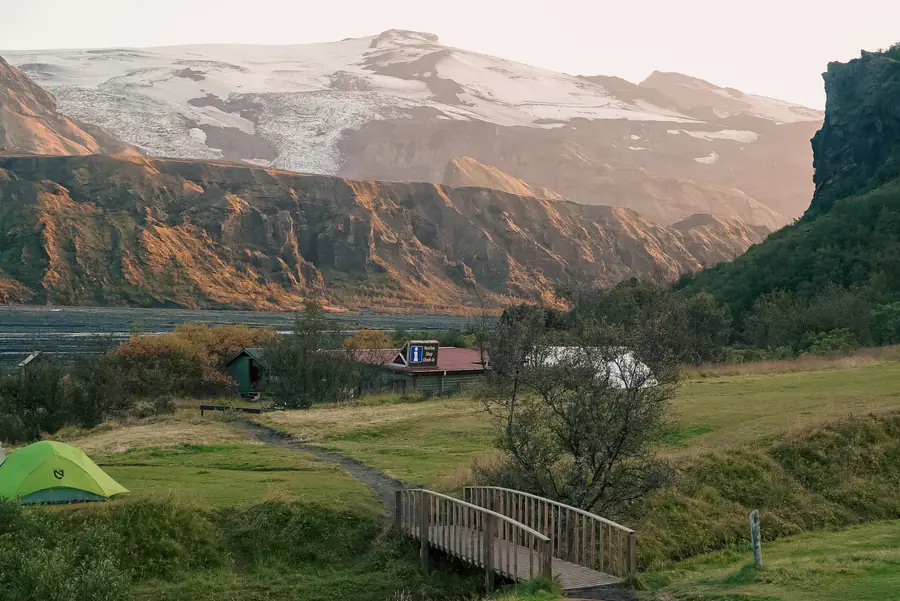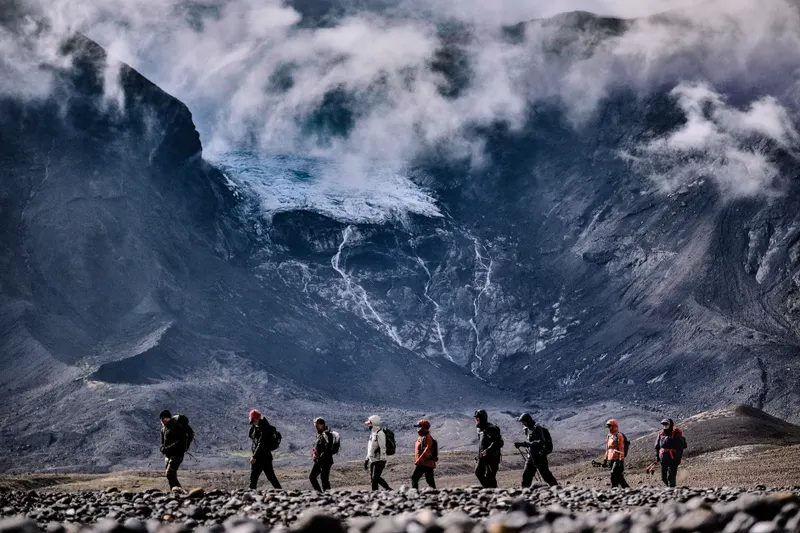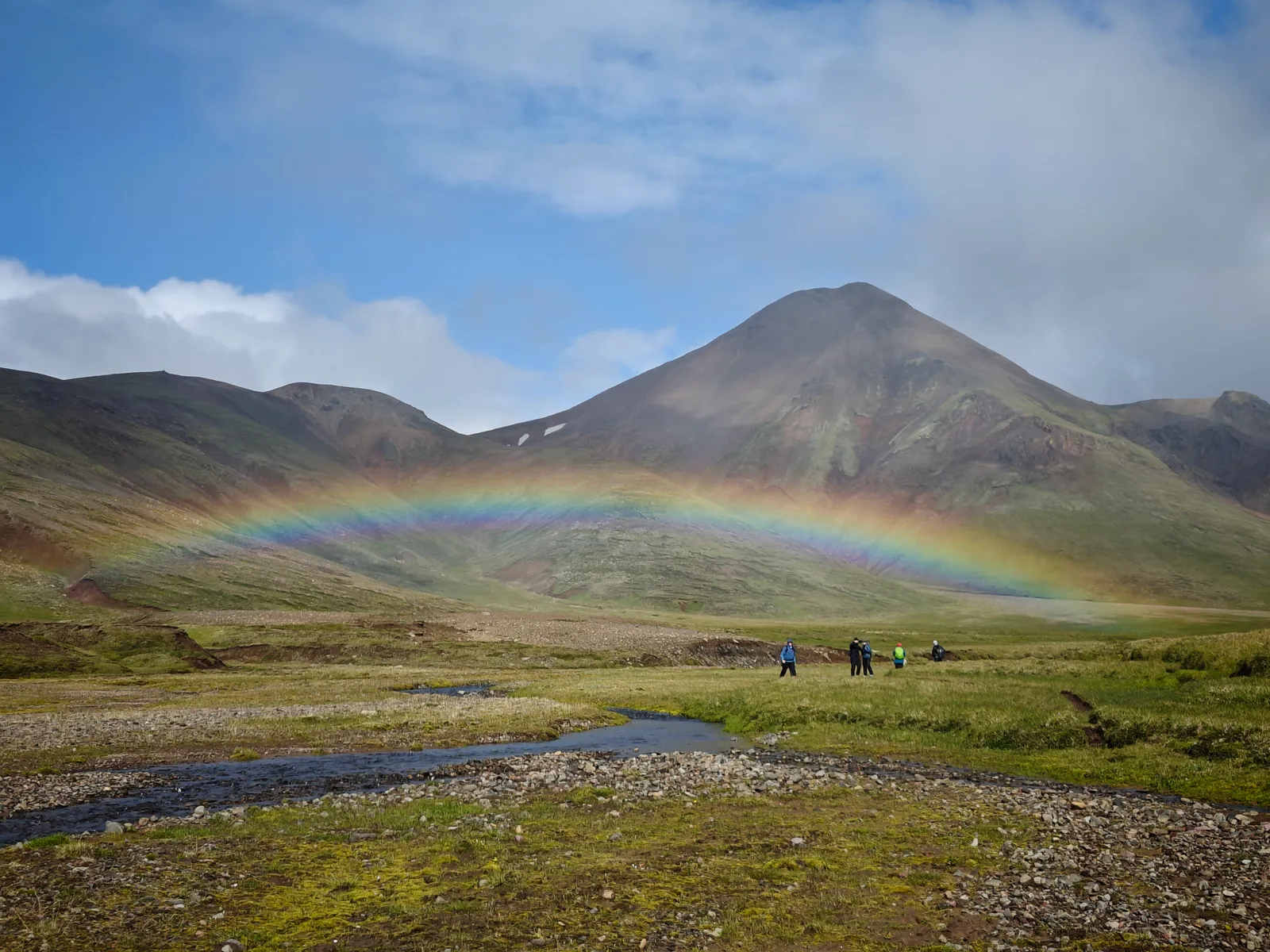
Choose summer if...
- You want Highland hiking or hut-to-hut trekking.
- You value long days and broader access.
- You are comfortable with more demand in popular places.

Iceland planning guide
Winter
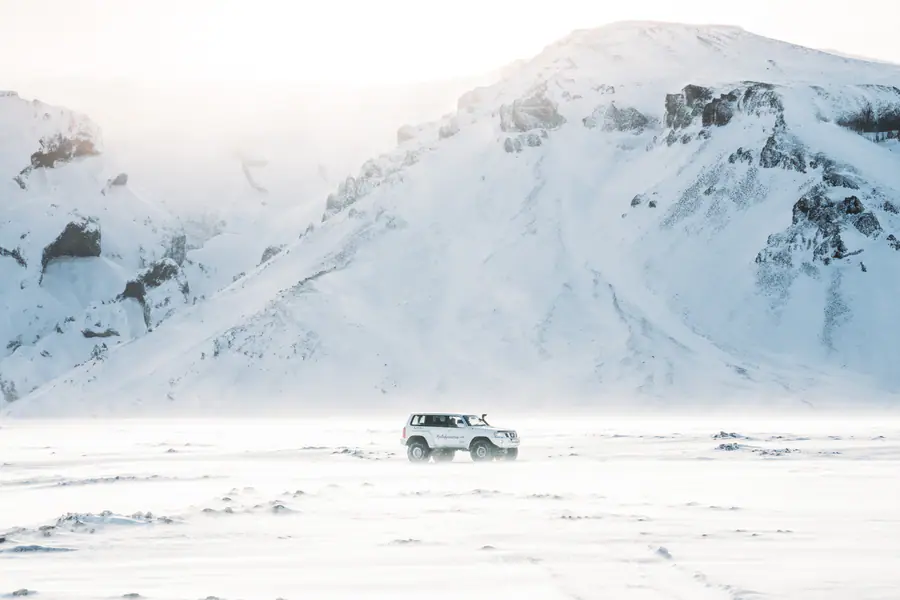
Winter is the right season for Northern Lights, ice caves, snowy landscapes, geothermal contrast, and quieter travel. It is also the season where weather and daylight shape each decision.
Premium winter trips work best with flexibility: fewer hard commitments, stronger guiding, and a route that can adapt to wind, ice, clouds, and road conditions.


Summer
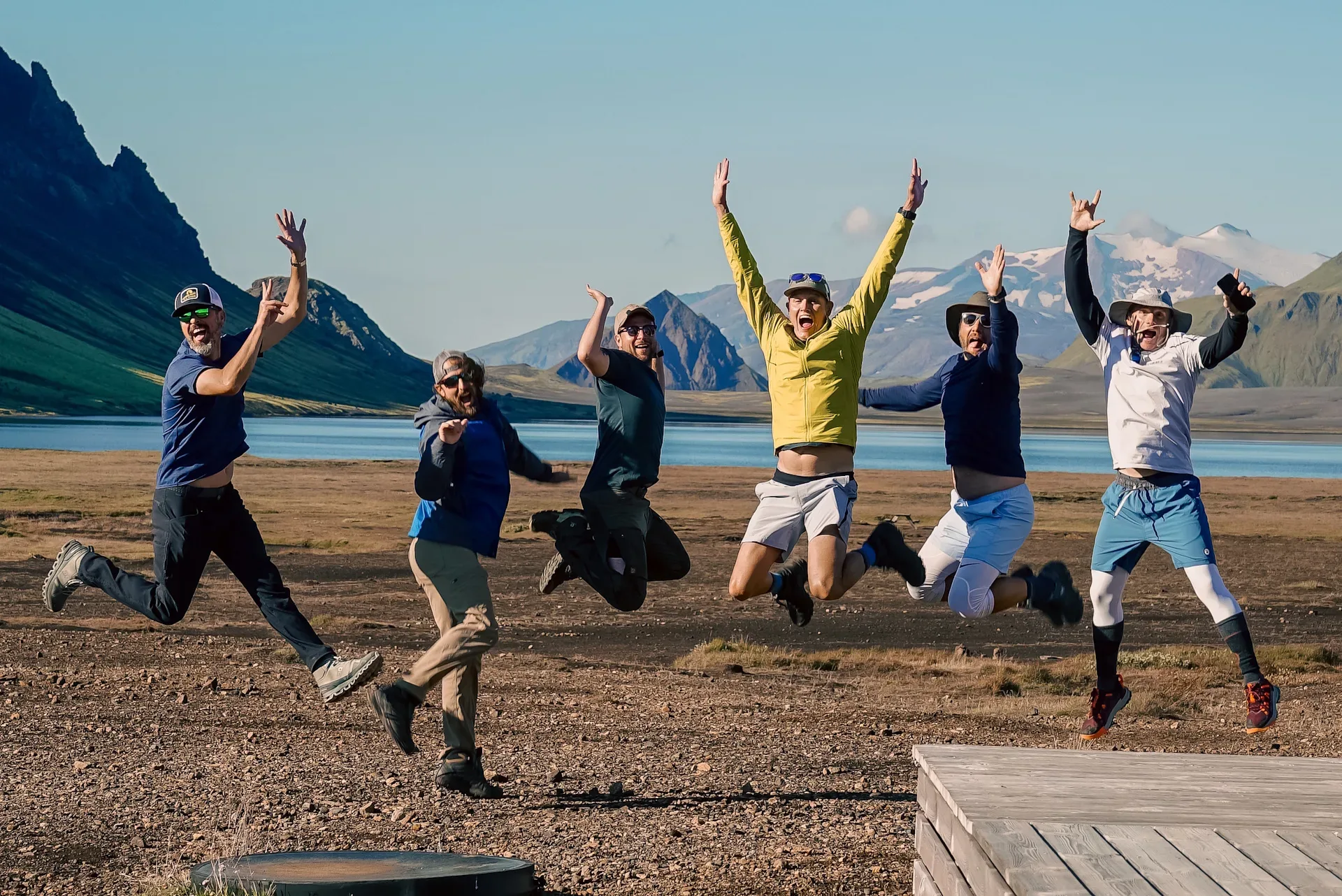
Summer brings long daylight and the main window for Highland trekking. It is the natural season for hut-to-hut routes, F-road access, remote hiking, and ambitious private journeys.
It is also the busiest season in famous places. If you want quiet, choose smaller groups, less crowded routes, early timing, or a tailored itinerary that does not simply follow the obvious line.
Shoulder seasons
Spring and autumn can be excellent for travelers who like atmosphere and flexibility. You may get softer crowds, interesting light, and better pacing, but some Highland access or winter-specific activities may not line up.
September is especially useful for travelers who want a bridge between hiking season and aurora season. May can be beautiful for lower-elevation travel, but it is not the same as deep Highland summer.
Decision guide
FAQ
For Highland hiking, July and August are usually strongest. For Northern Lights, choose darker months. For balanced travel, September can be excellent if you accept some seasonal tradeoffs.
No, not in a practical travel sense. Summer nights are too bright. Plan aurora travel for the darker season.
Highland access is generally a summer matter and varies by road, weather, and year. Always check current road and safety information before planning F-road or Highland travel.
Sources
Know the season, shape the route

Newsletter
New departures, field notes from Iceland, and practical planning ideas from the Norse Adventures team.