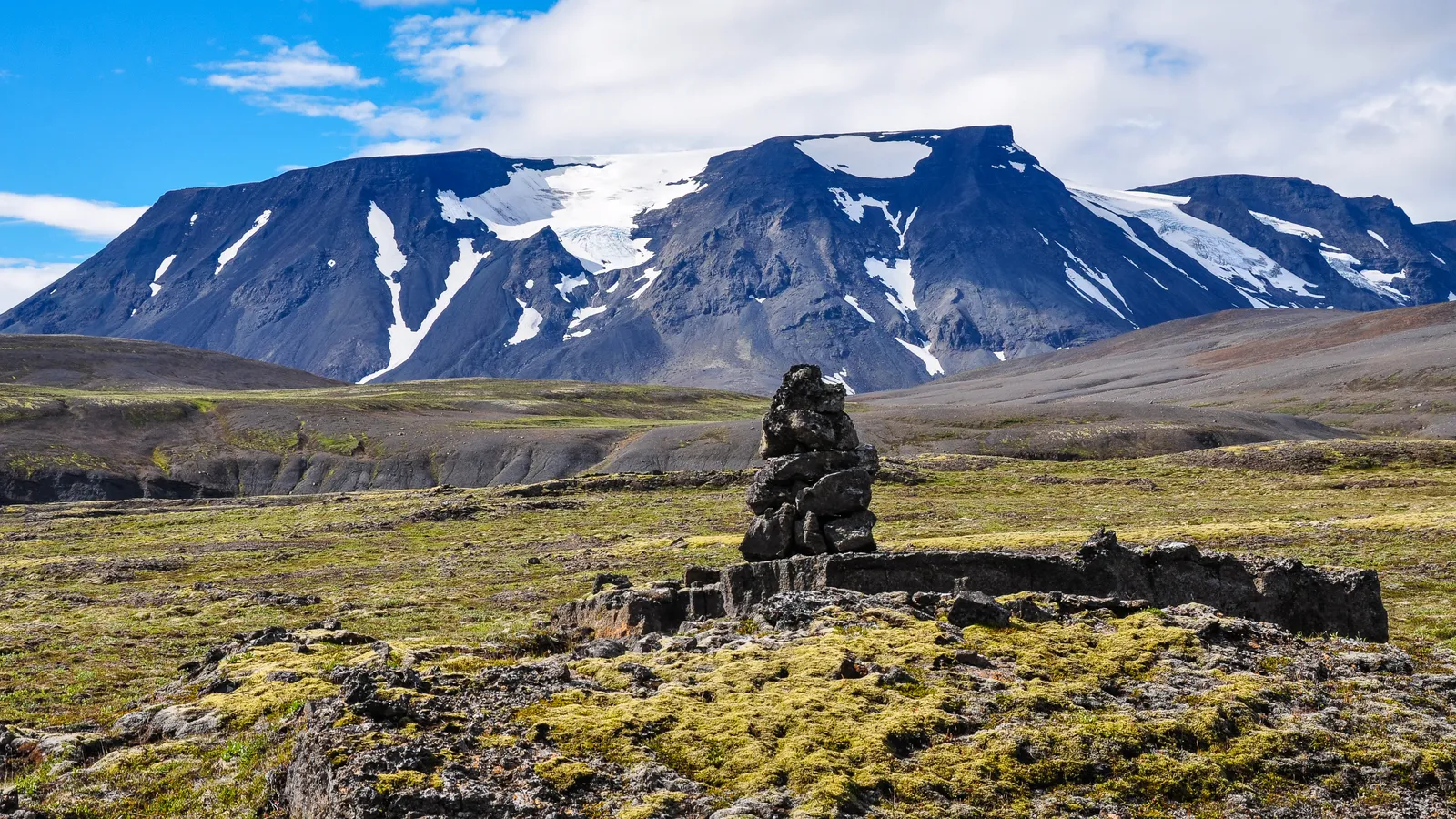

A rock can have a hidden-people story, a farm can appear in a saga, and an old manuscript can tell of Þór and Óðinn. These are not three versions of the same tale. They come from different traditions and tell us different things about Iceland.
Follow where a story came from and an ordinary-looking hill, a stretch of coast or an assembly field can become full of characters. This guide separates myth, medieval literature and folk legend, then shows where you can encounter each on a trip today.
First, the distinction
Myths, sagas and folk legends
Norse mythology tells of gods, giants and the making and ending of worlds. We know much of it through medieval Icelandic writing, especially eddic poetry and Snorri Sturluson's Edda. The family sagas are prose stories about people, households, law and conflict, mostly set in Iceland's early centuries but written down later. Many local folk legends were passed between people, tied to a particular hill, farm or coastline, and eventually written down by collectors.
These traditions overlap in language and imagery, but their dates matter. A saga set around the year 1000 was not necessarily written then. A legend recorded in the 1800s may have been told long before anyone wrote it down. The date of a manuscript or collection tells us when a story was recorded, not when it was first told.
A sense of time
Stories through the centuries
When a story was written down is not always when it began.
- c. 870
Settlement begins
The earliest Icelandic communities take shape; later sagas will look back to this era.
- c. 930
Assembly at Þingvellir
The Alþing begins meeting at a place you can still walk through today.
- 1200s–1300s
Sagas on vellum
Much of the saga literature is written, looking back to earlier centuries.
- 1800s–early 1900s
Folktales collected
Many oral legends are recorded; Sagnagrunnur now maps their people and places.
Gods on the page
Þór and Óðinn on the page
The names may feel familiar from films, but the medieval sources are stranger and more layered. Snorri's Edda, composed around 1230, was also a handbook for poets. It explains old stories so a reader can understand the figurative language of Norse verse. Snorri wrote after Iceland's conversion to Christianity around the year 1000; his book preserves much of what we know about the gods.
Objects add another layer. The National Museum displays a silver Þór's-hammer pendant from Foss in South Iceland, dated to roughly 950–1050. You can stand before an object from the age of conversion, then read stories preserved in manuscripts written centuries later.
People and places
Reading the saga landscape
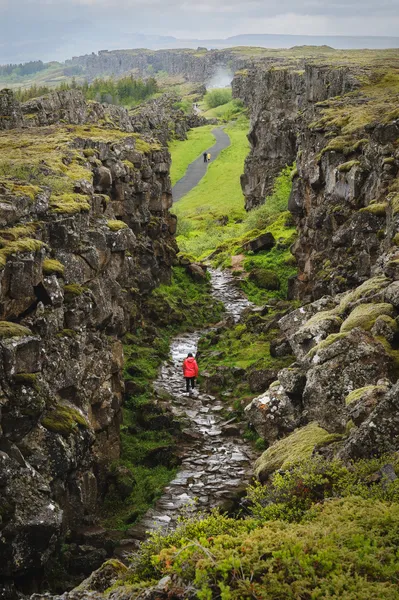
The sagas of Icelanders were largely written in the 13th and 14th centuries and look back to earlier Iceland. They bring family ties, reputation, feuds and hard journeys close enough to feel. Njáls saga gives law a dramatic turn: Njáll insists that a settlement be heard at the Alþing, with both sides and respected witnesses present.
The Alþing began meeting at Þingvellir around 930; Njáls saga was composed around 1280. Walk the assembly landscape with that scene in mind, while remembering that the saga is literature written centuries after the events it describes. In Reykjavík, the Settlement Exhibition takes you into a different kind of evidence: the excavated remains of an early longhouse beneath the city.
Hidden people and trolls
Folktales live surprisingly close to home
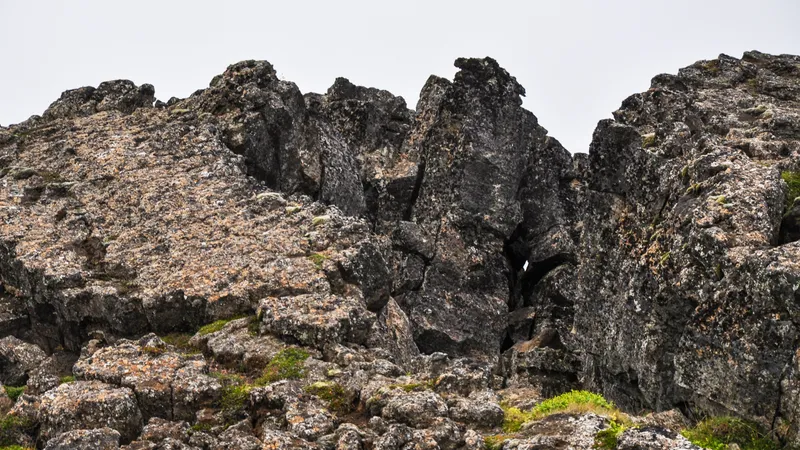
The best-known Icelandic folktales feature huldufólk (hidden people), álfar (elves), trolls and ghosts. They are not all stories about an empty, remote wilderness. Research into elf hills in the Westfjords found that traditional story places often stood close to farms, old routes and everyday work. A boulder near a home could have more narrative life than a distant mountain.
Many published folk legends were collected in the 19th and early 20th centuries. Sagnagrunnur, a research database, maps those stories alongside the places mentioned and the homes of storytellers and collectors. Follow one dot on its map and you find not only a strange tale but the person who told it and the place they knew.
Some legends come with a ready-made view. From Vík, look out toward the Reynisdrangar sea stacks. In one local telling, they were two trolls trying to drag a three-masted ship ashore; dawn caught them at work and turned them to stone.
Still being told
The stories did not stop in the Middle Ages
Icelandic storytelling is not sealed inside a manuscript case. At Christmas, the 13 jólasveinar, or Yule Lads, still turn up in children's stories and seasonal celebrations. Their mischief can be funny; their mother Grýla and the Yule Cat bring a much darker edge. Traditions change over time, which is part of their life.
If a guide or local resident tells you a story, ask who told it to them or whether another family has a different version. A place-name, a family retelling and a published collection need not agree. That is part of what keeps a story alive.
Follow the thread
Where to start on an Iceland trip
In Reykjavík, pair the National Museum's Making of a Nation exhibition with the Settlement Exhibition. One follows 1,200 years of objects, manuscripts and changing society; the other lets you see an excavated longhouse beneath the city.
At Þingvellir, read the national park's history before walking the paths. For folktales farther afield, browse Sagnagrunnur's map and look up a place you already plan to visit. Check museum hours, trail access and private-property boundaries before setting out; a story is an invitation to notice a place, not to climb over a fence or move its stones.
- For material history: start at the National Museum and the Settlement Exhibition.
- For literature: choose a translated saga or Edda with an introduction that explains when it was written.
- For place-based folktales: explore Sagnagrunnur and ask whose version of the story you are hearing.
Good to know
Common questions
Are the Icelandic sagas true?
They are medieval literature that can preserve memories of earlier people and places, but they are not transcripts of Viking-Age events. Archaeology, documents and the sagas give different kinds of evidence; do not treat one vivid scene as proof that it happened exactly as written.
Do Icelanders really believe in elves?
There is no single Icelandic answer. People may believe, be unsure, enjoy a family story, care about a place associated with one, or not take the tale literally at all. Folklore researchers study both traditional stories and how attitudes change; sweeping claims about what 'all Icelanders' believe miss that range.
Is Norse mythology the same as Icelandic folklore?
No. Stories of Þór and Óðinn are chiefly preserved for us in medieval texts; many hidden-people, troll and ghost tales come to us through later folklore collections. The traditions can share motifs, but they are not interchangeable.
Where can I learn about these stories without joining a tour?
Start with the National Museum and Reykjavík's Settlement Exhibition for history and archaeology, the Þingvellir National Park history for the assembly landscape, and Sagnagrunnur for a map of published folk legends. Check each museum's current hours and whether the material you want is available in your language.
Keep exploring